

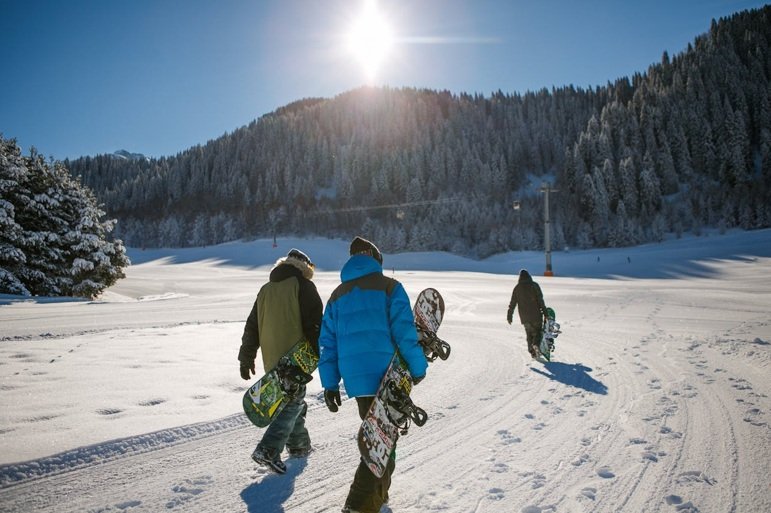
Lech is often described as one of the friendliest ski resorts in the Alps. Easy slopes, guaranteed snow, and a refined atmosphere of the resort can make recreational skiers feel comfortable from the date of arrival. And that reputation is indeed well-deserved, but on occasions, that leads to false security. Many skiers relax too much, assuming well-groomed pistes mean fewer risks.
In fact, even advanced recreational skiers around Lech commit avoidable safety errors not because of their carelessness but rather due to the underestimation of how rapidly alpine conditions could change. This is where the value of skiing with a Skiguide Lech truly becomes clear.
Below are some of the most common safety mistakes seen on Lech’s slopes, and how professional guidance helps prevent them.
1. Overestimating Personal Skill Level
One of the most frequent issues guides observe is skiers choosing terrain that doesn’t match their actual ability.
Most recreational skiers feel confident on familiar runs and assume that confidence automatically transfers to steeper or longer descents. In Lech, where pistes flow smoothly from one area to another, it’s easily possible to find yourself on a slope which suddenly feels more demanding than you expected.
How guides prevent this:
A professional Skiguide Lech assesses ability honestly—often within the first few runs—and selects routes that challenge without overwhelming. This reduces panic, poor technique, and risky decisions mid-run.
2. Ignoring Changing Weather and Snow Conditions
Lech’s weather can change quickly. It also varies in visibility, snow texture, and wind exposure from one lift to another. The place of interest for most recreational skiers is where they want to go rather than what is the condition that allows them to ski safely on any given day.
The slope felt easy in the morning can get slick or heavy by afternoon.
How guides prevent this:
Guides constantly monitor weather reports, snow conditions, and slope exposure. Working with a Skischule Arlberg means benefiting from local knowledge—knowing which runs hold snow better, which areas become icy, and when to change plans entirely.
3. Poor Route Planning
Most skiers depend on the trail maps or use an app on their phone, usually reassured that it will tell them the whole story. While maps are good, they can’t account for crowd flow, bottlenecks, or energy levels.
It is a common sight to see, late in the day, skiers stuck far from their base area, tired and in a hurry – one of the riskiest moments for accidents.
How guides prevent this:
A Skiguide Lech plans routes strategically, pacing the day so skiers finish strong instead of exhausted. Guides think ahead, not just about terrain difficulty but about lift queues, time of day, and safe exits.
4. Skiing Too Fast in Familiar Areas
Comfort invariably leads to complacency. Recreational skiers, as a rule, on wide groomed pistes have a tendency to increase speed without realizing how quickly situations can change, in particular during busy sections or near intersections.
High speed reduces reaction time, even for skilled skiers.
How guides prevent this:
Guides emphasize controlled skiing and smart line choice. The guides teach skiers to manage the speed at which they have fun, particularly in the most trafficked areas, with training standards set by Skischule Arlberg.
5. Underestimation of Fatigue
Of all the more commonly recognized ski safety risks, fatigue perhaps is overlooked most. Many recreational skiers overlook how tired their legs can affect their ability to balance and react and encourage themselves to keep skiing with “just one more run.”
The majority of ski accidents happen in the afternoon when skiers are exhausted, have lost the focus and have stopped concentrating and most are likely fatigued.
How guides prevent this:
Experienced guides watch body language closely. A Skiguide Lech suggests breaks, adjusts intensity, or else calls it a day before fatigue becomes injury. Realizing when to call it a day is as important as picking where to ski.
6. Skiing in Groups of Differing Abilities
Families and groups often ski together despite large differences in ability. Stronger skiers get bored, while weaker ones feel pressured. This leads to rushed turns, poor decisions, and stress.
How guides prevent this:
A guide trained through a Skischule Arlberg adapts routes and pacing so everyone feels comfortable. Groups stay together without forcing anyone beyond his limit, which makes the day safer and more enjoyable.
7. Relying Too Much on Equipment
Modern ski equipment is excellent, but it does not replace awareness. Too many skiers assume their skis, boots, or helmets compensate for poor technique or poor decision-making.
Equipment helps-but only when combined with good judgment.
How guides prevent this:
Guides place emphasis on techniques and positioning while also making sound decisions. At Skischule Tannberg Lech – Exclusive Mountain Guiding Arlberg, safety education is imbibed into every guided day without making it a lecture.
8. Lack of Local Knowledge
Even confident skiers may not give full respect to locals’ insight into how priceless such insider knowledge can be. Knowing which slopes are crowded at what time, where shade might be affecting the quality of the snow, or which areas funnel traffic makes quite a difference.
How guides prevent this:
A Skiguide Lech brings years of local experience to every decision. That insight reduces surprises and allows the skiers to relax, knowing that somebody else is thinking ahead.
Why Professional Guidance Makes a Difference
Mountain safety is not about fear—it is about the awareness of the skier. Skiers who have the opportunity to work with Skischule Tannberg Lech – Exclusive Mountain Guiding Arlberg feel much more comfortable skiing with a professional compared to an amateur. That confidence comes from knowing that risks are managed, routes chosen wisely, and help is always close.
Through the structure and standards of a Skischule Arlberg, guides are trained to balance enjoyment with responsibility. It does not remove freedom; it enriches it because uncertainty is diminished.
Final Thoughts
While Lech is an amazing place to ski, all mountains should be treated with respect. One of the most common safety mistakes that recreational skiers make is subtle, cumulative, and in many cases avoidable.
Utilizing Skiguide Lech provides skiers with the added benefit of enhanced safety while enhancing the overall experience of skiing at Lech. A skiguide allows you to experience Lech at your full potential, giving you the ability to feel confident, secure and have a good time by utilizing advanced planning, provided by the skiguide, local knowledge and calm decision-making.